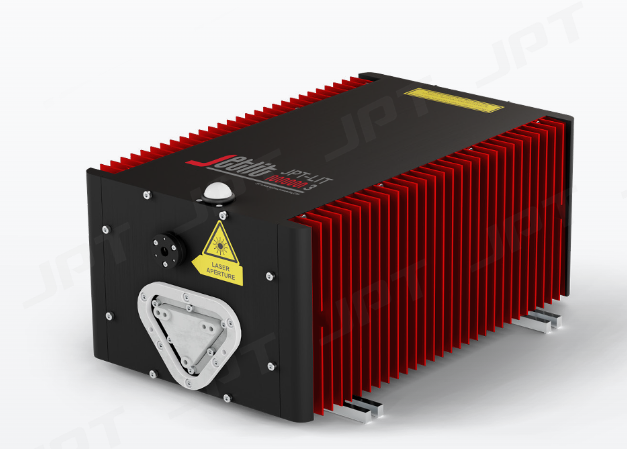
Across pulse Energy and Repetition Rate in Femtosecond Lasers, commercial value depends on whether engineering, quality, and purchasing teams can agree on measurable output requirements. Pulse Energy Repetition Rate Femtosecond specifications should identify pulse energy, repetition rate, beam pointing stability, pulse width, and output power stability because those values affect acceptance records, operator settings, and rework cost. For pulse energy repetition rate femtosecond, femtosecond lasers and femtosecond pulsed laser should be evaluated through the same trial data, inspection method, and service expectations.
Process Definition
Pulse Energy Repetition Rate Femtosecond process planning should list transparent-material processing, color marking, semiconductor production, display manufacturing, and micromachining, then connect each task with fixture control, inspection frequency, and recipe ownership. For pulse energy repetition rate femtosecond, source material identifies JPT-LIT source information includes detailed femtosecond laser specifications, giving the article a source-based technical base. Within pulse energy repetition rate femtosecond planning, a supplier page connected with femtosecond lasers gives useful background, yet the factory still needs cycle-time, material-limit, and inspection checks.
Hardware Relevance
During pulse energy repetition rate femtosecond review, JPT source details are most useful when buyers convert them into parameter ranges, sample plans, and service questions. For pulse energy repetition rate femtosecond, source material lists JPT-LIT 20 IR at 1030 ± 2 nm, M² < 1.2, >130 µJ maximum pulse energy, 100 kHz-1.0 MHz pulse repetition range with burst mode down to, which can be checked against the actual part family. As pulse energy repetition rate femtosecond moves toward sourcing, by linking femtosecond pulsed laser, the project file keeps supplier information close to the article while preserving an evidence-based tone.
Implementation Notes
The final evaluation for pulse energy repetition rate femtosecond should compare supplier capability with factory constraints such as floor space, maintenance access, and quality reporting. For pulse energy repetition rate femtosecond, source material identifies JPT-LIT 20 SH is listed at 515 ± 1 nm, M² < 1.2, >90 µJ maximum pulse energy, 100 kHz-1.0 MHz repetition range, and 400 fs pulse width, supporting a review that stays close to the original source material. For pulse energy repetition rate femtosecond, JPT provides the company reference, and the buyer can still judge the project through measurable process outcomes rather than promotional wording. For pulse energy repetition rate femtosecond, this documentation gives purchasing, engineering, and quality teams a shared reference after installation and later process review.
