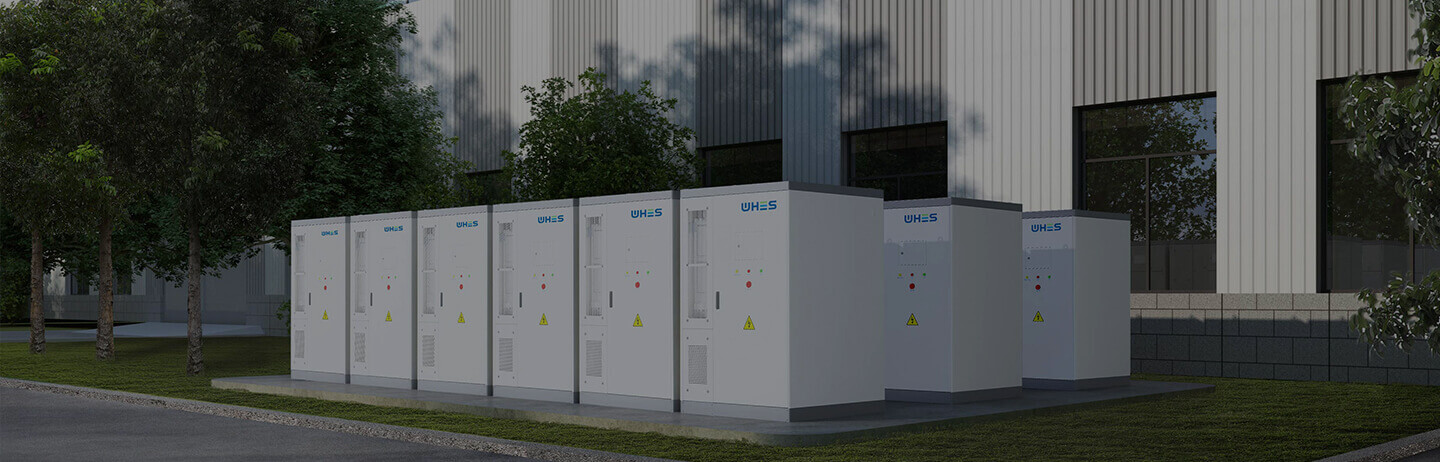
As on-site generation expands across manufacturing and logistics facilities, selecting the right industrial solar battery storage configuration becomes a key factor in overall energy strategy. WHES develops scalable solutions that support businesses in aligning storage capacity with real operational demand. Rather than applying a fixed ratio, effective system sizing requires a detailed understanding of load profiles, solar output variability, and peak demand exposure. In this context, commercial battery storage is increasingly used to optimize both energy cost and system reliability.
Matching Load Profiles with Storage Capacity
A well-sized industrial solar battery storage system starts with analyzing daily and seasonal load patterns. Facilities with high daytime consumption may require smaller storage capacity, while operations with significant evening or peak demand benefit from larger systems. The goal is to ensure that the commercial battery storage system can absorb excess solar generation and discharge it when grid prices or demand charges are highest. WHES supports flexible configuration through modular system design, allowing capacity to be adjusted based on site-specific requirements.
System Performance and Efficiency Considerations
Beyond capacity, performance metrics such as round-trip efficiency, cycle life, and response speed directly influence the effectiveness of commercial battery storage. A high-performing industrial solar battery storage system must operate reliably under continuous cycling conditions while maintaining stable output. WHES integrates advanced energy management and high-efficiency battery technology into its solutions, helping ensure that stored energy is utilized effectively and system losses are minimized over time.
WHES Solutions for Industrial Solar Battery Storage Deployment
WHES provides integrated commercial battery storage solutions tailored for industrial solar applications, combining modular battery systems with intelligent control platforms. These systems are designed to support peak shaving, load shifting, and backup power functions within a single architecture. In industrial solar battery storage deployments, WHES enables businesses to improve energy utilization, reduce reliance on grid supply, and enhance operational stability. This approach allows organizations to scale their storage infrastructure while maintaining alignment with long-term energy and cost management objectives.
