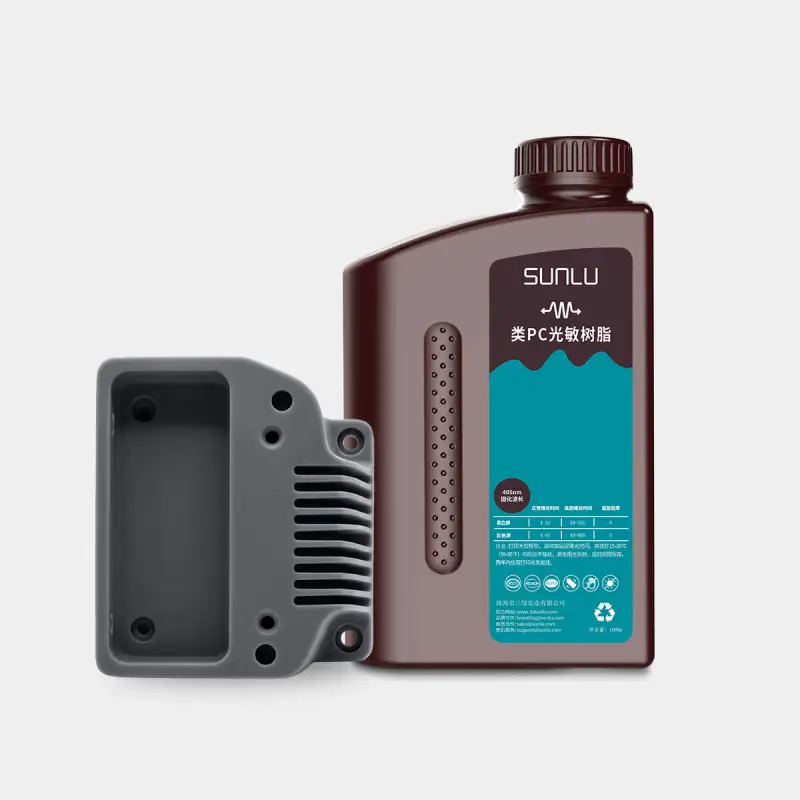
Choosing resin for a professional 3D printing workflow involves more than comparing prices or selecting a familiar material. Resin type affects print quality, mechanical performance, post-processing, and suitability for the final application. For businesses using resin 3D printing, material selection should therefore begin with the part’s functional requirements, printer compatibility, and expected production conditions.
Start With the Application
The first question is what the printed part needs to do. Standard resin is generally suited to models, prototypes, and applications where surface detail and straightforward printing are priorities. Functional components may require greater toughness, strength, impact resistance, or temperature stability.
For engineering validation, the resin should reflect the stresses that the prototype will encounter. A brittle material can be appropriate for visual models but less suitable for parts exposed to repeated bending or impact. This makes mechanical requirements an important starting point when evaluating a resin supply.
Match Resin Properties to Performance Requirements
Resin properties should be considered as a group rather than in isolation. Tensile strength, flexural strength, elongation, impact resistance, hardness, and heat resistance each describe a different aspect of performance. A material with high hardness, for example, does not automatically provide high toughness.
PC-like materials are useful when a project requires a balance of strength and toughness. SUNLU PC-Like Resin is designed with high toughness and impact resistance, helping cured models resist brittle fracture and withstand certain external impacts and bending. SUNLU also states that the material can withstand temperatures up to 140°C without softening or deformation under heat, making it suitable for jigs, fixtures, and heat-resistant components.
Consider Flowability and Printing Stability
Material behavior before curing also matters. Resin viscosity and flowability influence how the liquid spreads across the vat and can affect the consistency of each layer. Smooth flow can support stable printing and reduce process interruptions, particularly when businesses run repeated jobs.
SUNLU PC-Like Resin is formulated with moderate viscosity and good fluidity. According to SUNLU, the resin spreads evenly across the printing vat, helping reduce bubble formation during curing while supporting consistent layer quality and detail reproduction. For production teams, these characteristics can contribute to a more predictable resin 3D printing workflow.
Check Printer and Process Compatibility
Even a high-performance resin must be compatible with the printer and its exposure system. Businesses should confirm the resin’s recommended exposure settings, layer thickness, build conditions, and post-processing requirements before committing to a material. Printer profiles can also require adjustment when switching between formulations.
This step is particularly important when establishing a repeatable material workflow. A material that works well on one machine may need calibration on another because printer hardware, light source, screen technology, and operating parameters can differ. Testing a representative part before larger production runs can reduce material waste and process risk.
Evaluate Post-Processing and Part Requirements
Post-processing should be included in material selection from the beginning. Resin prints commonly require washing and curing after printing, and the workflow should match the intended production environment. Teams should also consider whether the final parts need sanding, drilling, tapping, painting, or other finishing operations.
For professional applications, the balance between printability and post-processing effort can affect total production time. A resin that delivers the necessary detail while remaining manageable during finishing may be more practical than selecting a material solely because of one headline property.
Build a Reliable Resin Supply Strategy
Material selection is only one part of procurement. Businesses using 3D printing at scale also need to consider consistency between batches, available packaging sizes, color options, storage requirements, and supplier support. These factors can influence production continuity as much as the material’s technical properties. Storage is another practical consideration. Resin should be handled according to the supplier’s instructions, protected from inappropriate light exposure, and kept in suitable conditions. Clear labeling and controlled inventory can help teams avoid material mix-ups when several formulations are used across different printers.
SUNLU offers a broad resin portfolio covering standard, ABS-like, flexible, toughness, PA-like, PC-like, high-temperature, and other application-oriented formulations. This range allows users to match materials to different printing objectives instead of relying on one resin for every job. A diversified resin supply can also help production teams respond to changing project requirements.
Make the Final Selection Based on the Part
There is no universally suitable resin for every 3D printing application. A practical selection process starts with the end-use requirement, then compares mechanical properties, thermal performance, flow behavior, printer compatibility, finishing needs, and procurement considerations.
For businesses, material selection should also be validated through representative test prints before standardizing a resin supply. This approach creates a stronger link between material specifications and actual production performance, supporting more consistent resin 3D printing results.
A Practical Material Choice for Professional Printing
SUNLU is an integrated enterprise specializing in the research, development, manufacturing, and sales of 3D printing materials and related electronic products. Its PC-Like Resin combines smooth flowability with toughness, impact resistance, and high-temperature performance for applications such as models, prototypes, gears, pipe joints, transmission structures, jigs, and fixtures. Businesses can evaluate this formulation alongside their printer and application requirements when developing a suitable material strategy.
